Sandalwood sacred Indian ritual—the relationship between these four words is not modern wellness marketing. It is a five-thousand-year fact. The first time sandalwood entered a sacred space, no one wrote it down. This is not because it was unimportant; it is because the practice was already so established that documentation seemed unnecessary. Like recording the fact that humans breathe.
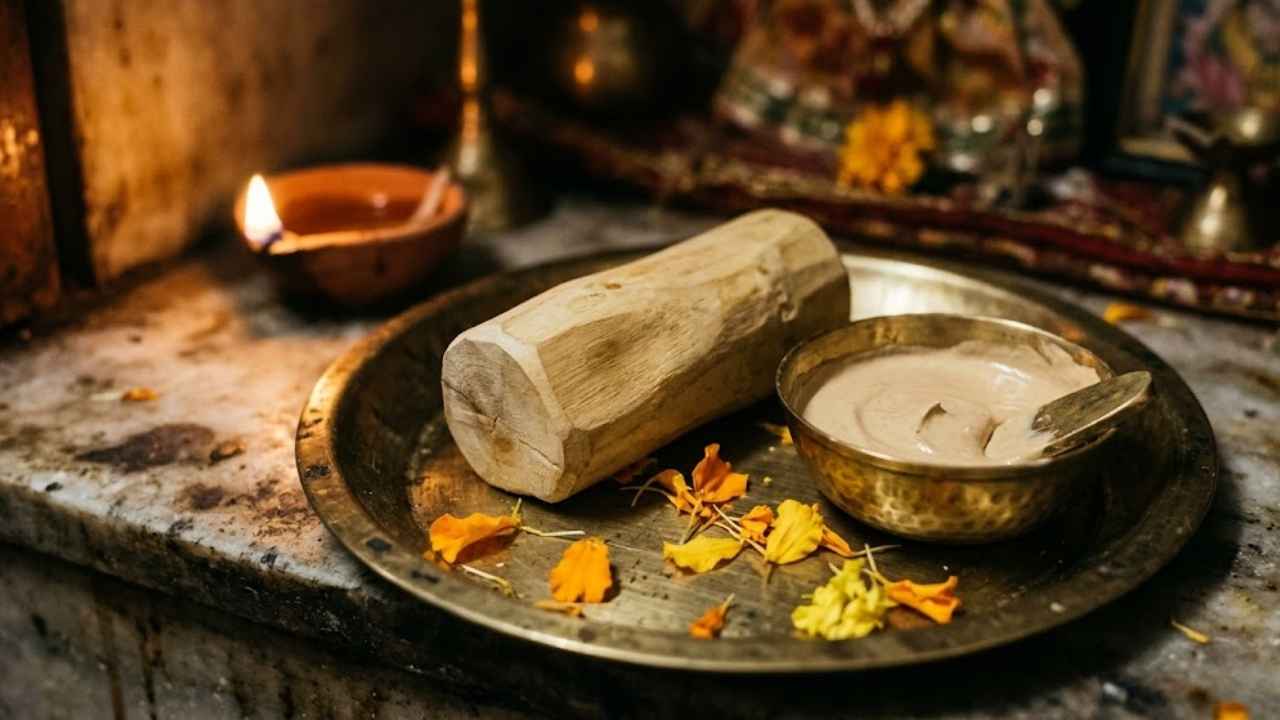
By the time the Rigveda was composed (roughly 1500 BCE, though the oral tradition it captured is older) chandana (sandalwood) was already a fixture of sacred practice in India. It appeared in ritual, in medicine, and in the preparation of the body for ceremony. It was applied to deity statues, offered to fire, ground into paste, and placed on the forehead at the point between the eyebrows where the Ajna chakra sits.
“Sandalwood sacred Indian ritual” is not a phrase; it is a fact. The two have been inseparable for longer than most civilizations have existed.
What the temples knew about Sandalwood Sacred Indian Ritual that science is only confirming
The reason sandalwood has been placed at the center of Indian ritual practice for five thousand years is not mystical. It is chemical. Sandalwood contains a compound called “alpha-santalol”—a sesquiterpene that has documented effects on the human nervous system. Multiple studies, including research published in the Journal of Complementary and Alternative Medicine, confirm that alpha-santalol reduces anxiety, lowers cortisol, and induces a state of mental clarity and groundedness.
The priests who ground sandalwood paste every morning before temple prayers did not have the vocabulary of neurochemistry. But they had five thousand years of empirical observation. They knew that when sandalwood entered a space, the quality of attention in that space changed. The mind became quieter. Prayer became more focused. The boundary between the ordinary and the sacred became easier to cross.
This is the meaning of the word “chandana” in Ayurvedic texts: not just a fragrance, but a mood-altering medicine for the mind.
Mysore sandalwood—why provenance matters
Not all sandalwood is equal, and for anyone serious about sandalwood sacred Indian ritual practice, this matters enormously. The most revered sandalwood in the world and the most therapeutically active comes from a specific region of Karnataka, India, centered on Mysore. Santalum album, the Indian sandalwood species, grown in this specific soil at this specific altitude, produces sandalwood oil with significantly higher concentrations of alpha-santalol than any other source.
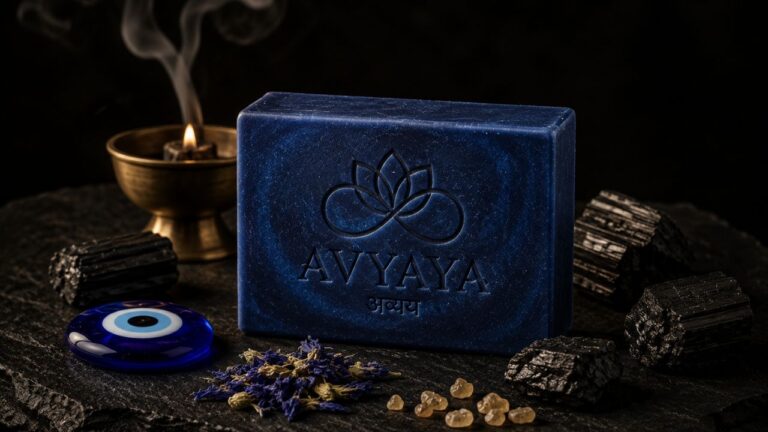
This is why Avyaya uses only Mysore sandalwood in the Haldi Chandan Kesar Soap and the Manifestation Candle fragrance base. Not because of origin story marketing. Because the therapeutic and ritual properties of sandalwood are directly related to the quality and concentration of its active compounds. Using a lower-grade sandalwood would not be the same ingredient; it would be a different one.
The Mysore sandalwood trade has been government-regulated in Karnataka since the 19th century — a mark of how seriously the Indian state has taken the preservation of this extraordinary resource.
Sandalwood in Ayurveda — what the Charaka Samhita prescribes
The Charaka Samhita, which is one of the foundational texts of Ayurvedic medicine, compiled roughly 600 BCE, lists sandalwood among the primary cooling and calming herbs. In Ayurvedic classification, sandalwood is a pitta pacifier. Pitta is the fire element in Ayurvedic constitution, with the qualities of heat, intensity, ambition, and inflammation. When Pitta is in excess, the mind becomes scattered, irritable, and unable to settle. When Pitta is balanced, the mind is focused, clear, and purposeful.
Sandalwood cools Pitta. This is why it has been prescribed in Ayurveda for mental restlessness, skin inflammation, and difficulty in meditation. The same mechanism that makes it a skincare ingredient, which is anti-inflammatory and skin-soothing, also makes it a mental-clarity ingredient. The body and mind, in Ayurvedic understanding, are not separate systems.
How to use sandalwood in your daily ritual
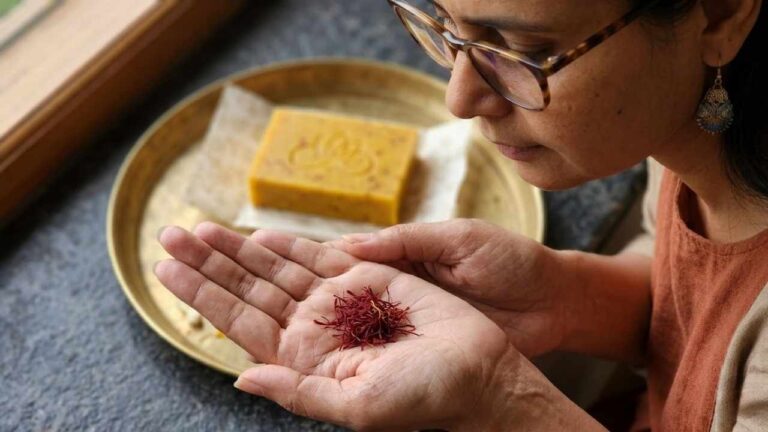
If you are beginning a sandalwood sacred Indian ritual practice, start in the morning. Sandalwood belongs in the first part of the day — before the mind has accumulated the noise of other people’s thoughts and demands. The Haldi Chandan Kesar Soap used in the Abundance ritual allows you to bring sandalwood into your morning shower without any preparation; the ingredient is activated by water and warmth, releasing its scent and its therapeutic compounds as you lather.
If you want to go deeper: the Manifestation Candle uses a sandalwood and sacred resin fragrance base that, when lit, creates the same atmospheric shift that temple priests relied on for millennia. Light it before you begin any focused work, any important decision, or any creative practice. Sit with it for at least two minutes before you begin. Let the space change quality. Then proceed.
The practice does not require belief in its mechanism. It only requires attention.
Why Avyaya uses only Mysore sandalwood
Avyaya’s sourcing principle for every ingredient is the same: we use only the original and most revered source, because authenticity cannot be simulated. You can find sandalwood fragrance oils from dozens of suppliers at a fraction of the cost of genuine Mysore sandalwood. They will smell similar. They will not be the same. The alpha-santalol concentration is different. The ritual lineage is different. The five-thousand-year thread of human practice that runs through authentic Mysore chandan is not present in a synthetic approximation of its scent.
This is the Avyaya position on sandalwood sacred Indian ritual sourcing and every sacred ingredient: if it is worth including, it is worth sourcing correctly. Read the full story of every ingredient we use in the Avyaya ingredients glossary.