Before the rest of the world has made a single demand of you, there is a window.
A few minutes of warm water, quiet, and the particular quality of a morning that has not yet been claimed by anyone else. Most of us move through this window without noticing it, hurrying through the shower, mentally already at our desks, using the Ayurvedic morning bath ritual as nothing more than a functional act of hygiene before the real day begins.
Ayurveda has a different understanding entirely.
In the five-thousand-year-old science of life, the morning bath is not a precursor to the day. It is the foundation of it. The Ayurvedic morning bath ritual, snana, is described in classical texts as one of the most important acts of dinacharya (daily routine) a person can perform. Not because of what it cleans from the outside. Because of what it prepares on the inside. And once you understand what Ayurveda says about why this ritual matters, you will never rush through your morning the same way again.
What Is Snana: The Ayurvedic Name for the Morning Bath Ritual
Snana comes from the Sanskrit root “sna,” meaning “to bathe” or “to purify.” But in Ayurvedic literature, its meaning extends far beyond the physical act of washing.
The Ashtanga Hridayam, one of the three foundational texts of Ayurveda, describes snana as a practice that “removes fatigue, sweat, impurity, and itching; brings in strength, clarity, longevity, purity, and vitality; and removes sin.” The word sin here is not moral in the modern sense, it refers to papa, the accumulated energetic residue of thought, action, and environment that the subtle body carries. The Ayurvedic morning bath ritual is understood to cleanse both the physical and the energetic body simultaneously.
In Vedic tradition, snana was one of the pancha shuddhi, the five purifications performed before prayer, before ceremony, and before any auspicious beginning. It was never incidental. It was the preparation for presence.
This is the distinction that changes everything: the Ayurvedic morning bath ritual is not preparation for the day’s tasks. It is preparation for the day’s consciousness.
Why Ayurveda Places the Morning Bath at the Centre of Daily Life
Dinacharya, the Ayurvedic daily routine, is one of the most sophisticated frameworks for daily living in any tradition. It maps specific practices to specific times of day based on the movement of the three doshas, Vata, Pitta, and Kapha, across the twenty-four-hour cycle.
The early morning hours, from approximately 6 AM to 10 AM, are governed by Kapha, the dosha of earth and water, associated with heaviness, groundedness, and the particular inertia of deep sleep. Waking in Kapha time means the body and mind carry a natural heaviness; the Sanskrit word is tamas, which needs to be consciously moved through before clarity and energy become available.
The Ayurvedic morning bath ritual is prescribed specifically for this transition. Warm water activates the body’s circulation and metabolism. Sacred ingredients like haldi, chandan, neem, and activated charcoal stimulate the skin, the body’s largest organ of elimination, into active purification. The deliberate act of bathing with intention shifts the mental state from tamas (inertia) to rajas (activity) to sattva (clarity), the progression that Ayurveda considers optimal for a productive, conscious day. [Link to Ayurvedic research on dinacharya and dosha cycles]
Ayurveda’s prescription is not simply “bathe in the morning.” It is: perform the Ayurvedic morning bath ritual with the right ingredients, the right intention, and the right quality of attention, and every system of the body and mind will respond accordingly.
The Five Elements of a Proper Ayurvedic Morning Bath Ritual
Classical Ayurvedic texts describe five elements that distinguish a sacred snana from a functional shower. Each one matters:
1. Warm Water (Ushna Jala)
Not hot, not cold, but warm. Hot water is specifically cautioned against in Ayurvedic bathing practice, as it depletes ojas (vital essence) and aggravates Pitta. Cold water, while invigorating, is reserved for specific therapeutic purposes. Warm water is tridoshic balancing for all three doshas and opens the pores, relaxes the nervous system, and prepares the skin to receive the benefits of whatever sacred ingredients are applied. Ayurvedic research on water temperature and dosha balance
2. Sacred Ingredients (Dravya)
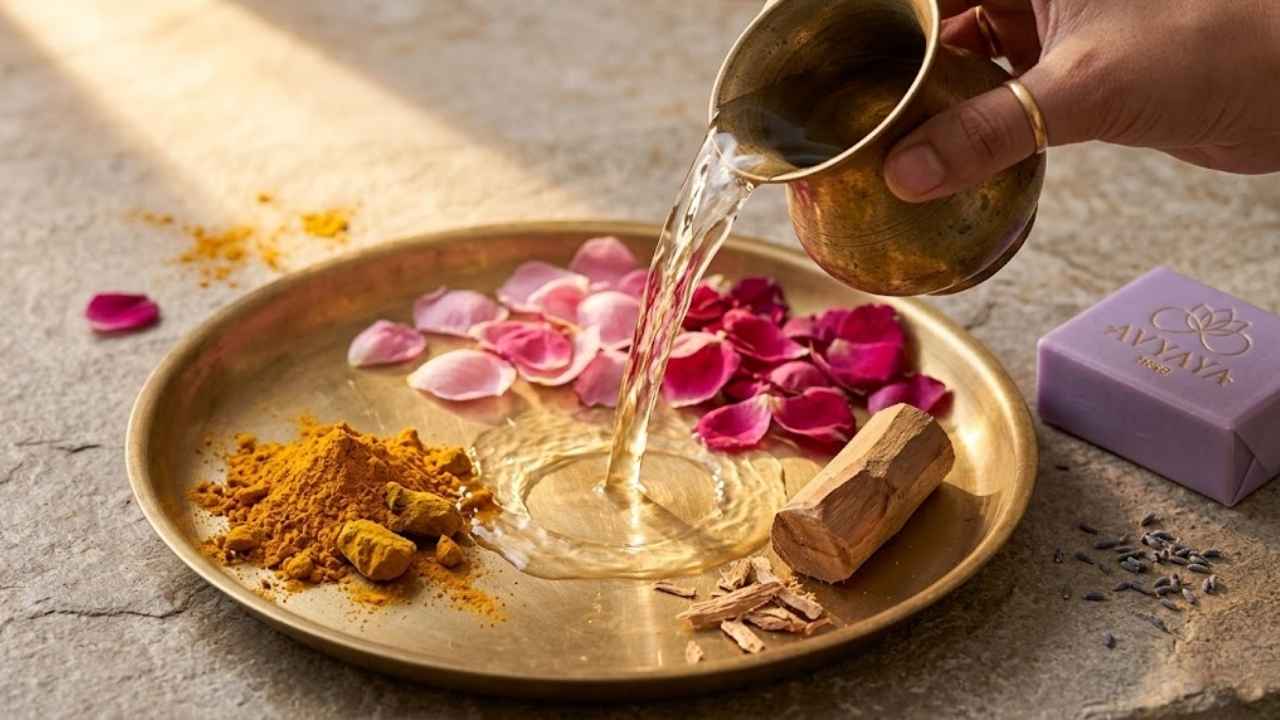
Ayurveda is highly specific about what belongs in or on the body during snana. Haldi (turmeric) for purification and radiance. Chandan (sandalwood) for cooling and mental clarity. Neem (nimba) for protection and antibacterial cleansing. Activated charcoal for deep energetic and physical purification. Each ingredient carries a specific guna, or quality, that acts on the body and the subtle energy field simultaneously. The Ayurvedic morning bath ritual is only as powerful as the ingredients it employs.
3. Intention (Sankalpa)
Before touching the water, Ayurvedic practice prescribes setting a sankalpa, a conscious intention for the day. This is not a motivational exercise. It is the act of directing the mind toward a specific quality of consciousness before the day’s distractions have arrived to scatter it. The intention set in the prepared state of snana carries a weight that intentions set in distraction cannot match.
4. Deliberate Pace (Sthirata)
The Ayurvedic morning bath ritual is never rushed. The quality of sthirata, steadiness, and unhurried presence is itself a practice. Moving through the bath slowly, with full sensory attention to each ingredient, each step, and each breath, cultivates the internal stability that Ayurveda considers essential to a well-lived day.
5. Closing with Gratitude (Kritajna)
Classical texts describe closing the morning ritual with an expression of gratitude to the water, to the body, and to the day being entered. In Vedic tradition, kritajna (gratitude) is understood as the energetic seal that anchors the benefits of the practice and prevents them from dissipating into the busyness of the day.
What Ingredients Belong in an Ayurvedic Morning Bath, and Why
Ayurveda’s ingredient wisdom for snana is extraordinarily detailed and it maps almost precisely to the ingredients at the heart of the Avyaya ritual range.
Activated Charcoal
While not named in ancient texts by this modern term, the Ayurvedic principle of using carbon-based substances for purification (shodhana) is well established. The Avyaya Charcoal Aura Cleansing Soap brings this tradition into the modern Ayurvedic morning bath ritual, with activated bamboo charcoal drawing impurities from skin and energy field simultaneously, neem performing its centuries-old protective function, and eucalyptus opening the airways in the precise manner that Ayurveda prescribes for morning mental clarity.
Haldi, Chandan and Kesar
These three ingredients appear together in Vedic bathing ceremonies (abhyanga snana) dating back thousands of years. Haldi purifies and illuminates. Chandan cools and stills. Kesar, genuine Grade A Kashmiri saffron, is the most sattvic of the three, elevating the quality of consciousness in which the bath is performed. The Swarna Shuddhi Bar distills this exact triumvirate into a single ritual bar—single-origin Erode turmeric, pure sandalwood, and Grade A Kashmiri Kesar—for the Ayurvedic morning bath ritual that calls in abundance and radiance.
Rose and Himalayan Clay
Rose (pushpa) is used in Ayurvedic snana specifically for its effect on the heart chakra (anahata) and its deeply nourishing quality for the skin. Pink Himalayan clay performs the function of mrittika, sacred earth used in bathing ceremonies for its mineral-drawing and grounding properties. Together they create the ideal ingredients for a self-love and renewal practice within the Ayurvedic morning bath ritual.
Every Avyaya product was built around this ingredient wisdom, not as a reference to tradition, but as a genuine continuation of it. Browse the complete ritual collection to find the ingredients that belong to your morning.
How to Perform the Ayurvedic Morning Bath Ritual Step by Step
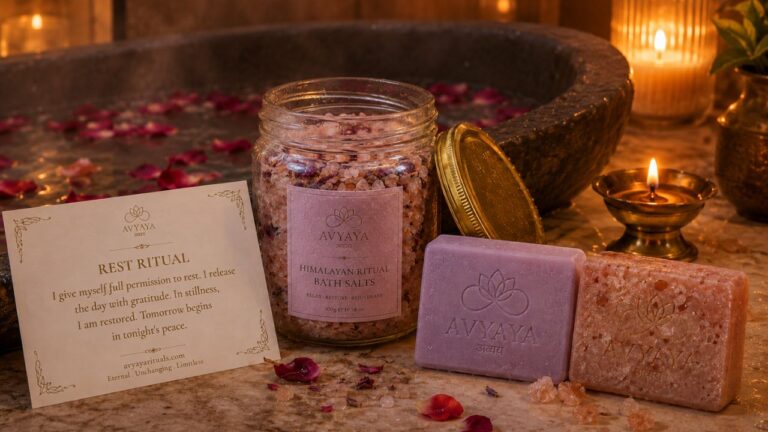
What you need: Your chosen Avyaya ritual bar, warm water, your affirmation card, one small candle or diya (optional)
Time: 10–15 minutes
Step 1: Set the space before the water runs
Before turning on the tap, pause. Light a small diya or candle if you have one. Set your sankalpa, your intention for the day. Name it clearly, even silently. The Ayurvedic morning bath ritual begins before the water does.
Step 2: Enter the water deliberately
Step into warm, not hot, water. Stand still for a full breath before reaching for anything. Allow the warmth to begin its work on the nervous system. Kapha inertia responds to warmth; you will feel the heaviness of sleep beginning to release.
Step 3: Apply your sacred ingredients with intention
Take your ritual bar and lather slowly, beginning at the face and moving downward, following the natural direction of energy flow in the Ayurvedic body map. As you apply each ingredient, hold its purpose in mind—purification, abundance, protection, love, or rest—whichever intention belongs to your morning.
Step 4: Pause within the practice
At some point in the Ayurvedic morning bath ritual, mid-lather, under the water, pause completely for three breaths. This is not a yoga exercise. It is the quality of sthirata, the moment of genuine arrival in your own morning, that the entire practice is building toward.
Step 5: Close with gratitude and your affirmation
Rinse completely. Before stepping out, read your affirmation card aloud three times. Close with three words: thank you. To your body. To the water. To the morning. The Ayurvedic morning bath ritual is complete.
What Changes When You Make This a Daily Practice
One Ayurvedic morning bath ritual will give you a beautiful morning. That alone is worth having.
But dinacharya, Ayurveda’s daily routine framework, is built on the understanding that the benefits of practice compound over time. A single morning of intentional bathing shifts your state. Thirty mornings of it begins to shift your baseline.
Ayurvedic physicians describe this accumulation as the building of ojas, the subtle essence of vitality that determines your resilience, your immunity, and your capacity for joy. Ojas is not built in moments of peak performance. It is built in the quiet consistency of daily practice. In the ten minutes you give yourself every morning before the world asks anything of you. In the deliberate act of arriving in your own body before the day arrives in your inbox.
Modern research is beginning to document what Ayurveda has always understood: consistent morning routines lower cortisol, improve immune function, enhance cognitive performance, and build the psychological resilience that makes difficult days manageable. [Link to NCBI research on morning routine and cortisol] The Ayurvedic morning bath ritual is not ancient wisdom waiting to be validated by science. It is a practice that science is finally catching up with.
Your grandmother knew this. Her grandmother knew this. The lineage is unbroken; it has simply been waiting for you to step back into it.
The Ayurvedic morning bath ritual is ready. It has been ready for five thousand years.
Begin your practice today with the Avyaya ritual collection; every product arrives with an affirmation card, handmade in small batches, with the care that this lineage deserves.
Frequently Asked Questions
What time should I perform the Ayurvedic morning bath ritual?
Ayurvedic texts prescribe snana during the Brahma muhurta, the auspicious period approximately 96 minutes before sunrise, or failing that, during the early morning Kapha hours between 6 AM and 10 AM. The key principle is that the Ayurvedic morning bath ritual should be performed before the day’s activities begin, not squeezed between them. Even 10 minutes at 7 AM, performed with full intention, is infinitely more valuable than 30 minutes performed in distraction.
Is the Ayurvedic morning bath ritual different for each dosha?
Yes, Ayurveda does prescribe variations based on individual dosha constitution (prakriti). Vata types benefit from warming, oil-rich ingredients and slightly longer baths. Pitta types benefit from cooling ingredients like rose, sandalwood, and coconut and cooler water temperatures. Kapha types benefit from invigorating ingredients like activated charcoal, eucalyptus, and peppermint with brisk application. That said, the five foundational elements—warm water, sacred ingredients, sankalpa, deliberate pace, and closing gratitude—are universal across all three doshas. Ayurvedic dosha bathing research
Can I perform the Ayurvedic morning bath ritual in a shower rather than a bath?
Yes, and this is the most practical form for daily practice. Classical texts describe snana as water poured over the body, which maps directly to the modern shower. The bath format (with Avyaya Himalayan Ritual Bath Salts) is prescribed for deeper, less frequent weekly rituals rather than daily. The shower-based Ayurvedic morning bath ritual using a sacred ritual bar is your daily practice. The bath is your weekly ceremony.